
Home > About
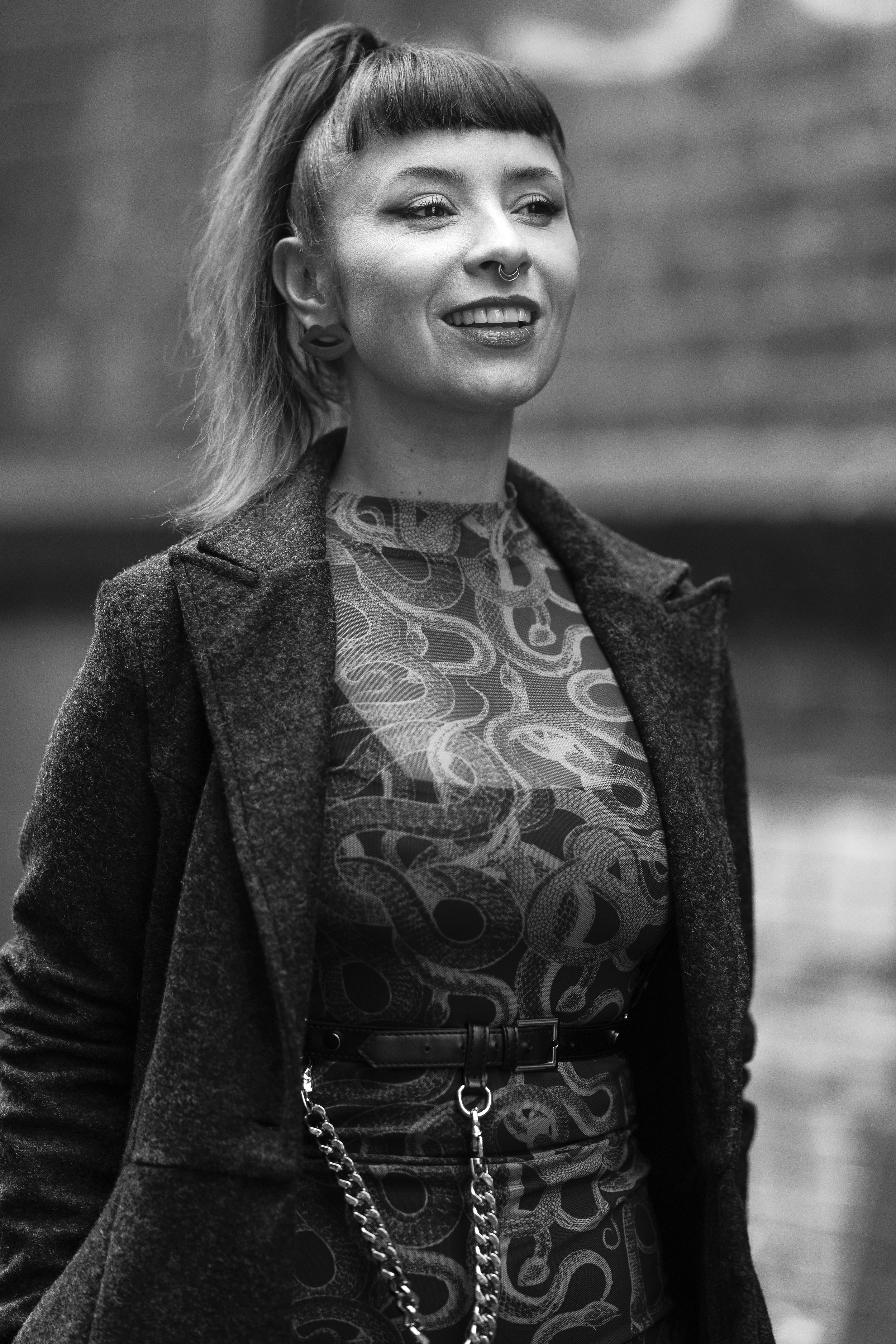
Carolina Amaya, Colombian artist who lives and works in Berlin.
Her artistic practice investigates the body as a living interface and a migratory territory of transformation, where ancestral memory, belief systems, and speculative technologies intersect. Skin and hair become visible and sensitive landscapes: hair growth and skin texture function as signals of transformation, reflecting shifts in mental, ancestral, and embodied programming. She conceives the intelligence of the body not as fixed or exclusively biological, but as a space where history is inscribed, displaced, and continuously reprogrammed and observed.
She combines archives, family narratives, bodily gestures, Indigenous mythology, personal experience, psychodermatology, and neurobiological frameworks with organic materials linked to her Latin American heritage; soil, clay, jute, bijao leaves, rituals, objects, and human hair, to explore how the body can store, activate, and transform ancestral knowledge. From the epistemologies of the body and female lineage, her mother, grandmothers, and daughters, the body emerges not only as a bearer of memories of pain, but also as a repository of embodied knowledge connected to care, desire, humor, and pleasure. These memories persist as active presences within the living body, offering both guidance and potential for transformation.
By integrating ancestral and scientific frameworks with materials, rituals, and interactive systems, she investigates how the body can function as a reprogrammable interface, making invisible processes of belief, inheritance, and transformation perceptible. Her personal experience of hair regrowth after years of alopecia operates as a living manifestation of this speculative process, demonstrating how shifts in mental, ancestral, and embodied beliefs can materialize physically.
She questions official narratives in Colombia, historically constructed through colonial, patriarchal, and centralized perspectives that have excluded other forms of memory and bodily experience. These narratives have silenced the experiences of bodies, particularly female bodies, as well as family histories, ancestral knowledge, and Indigenous cosmologies, reducing the complexity of the territory to singular, linear accounts.
